
TC400 Crack Width Meter
TC400 crack width meter is a high-precision intelligent instrument designed specifically for monitoring the health of concrete structures. Its core mission is to accurately detect the width of cracks on the concrete surface and perform long-term, real-time automated monitoring of the crack development process, providing crucial data support for engineering safety assessments and maintenance decisions.
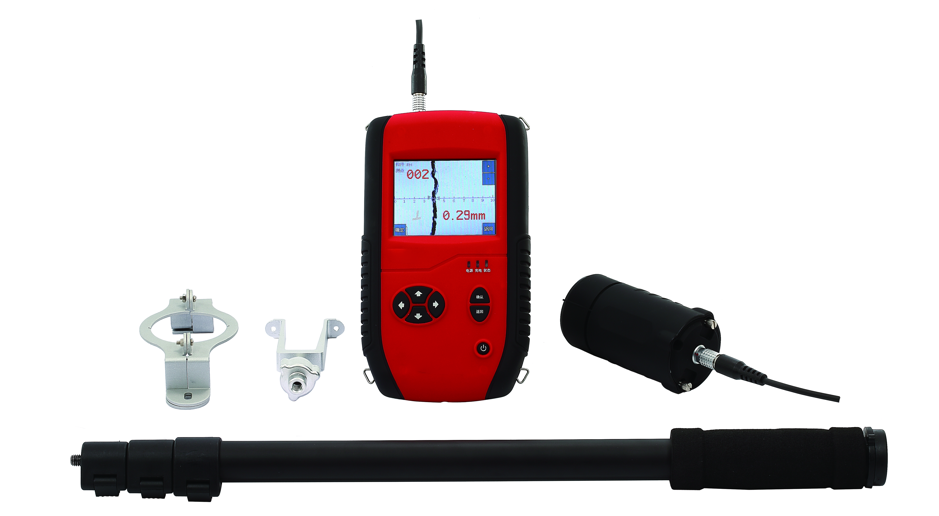
Core Functions Explained
- Precise Crack Width Detection
The TC400 employs high-resolution optical measurement technology, enabling non-contact, high-precision width measurement of static cracks on the concrete surface, with a resolution typically down to the micrometer level (e.g., 0.01 mm). It quickly replaces traditional calipers, achieving digital recording and reducing human error.
- Long-Term Real-Time Dynamic Monitoring
This is the core advantage of the TC400. The instrument can be fixedly installed at critical crack locations for continuous monitoring for days, months, or even longer.
It can record in real-time the subtle changes in crack width under the influence of external factors such as temperature variations, load application, and structural settlement, revealing the crack's activity pattern (stable, expanding, or contracting).
- Automated Image Recording and Storage
During dynamic monitoring, the TC400 automatically captures and saves clear crack images at preset time intervals.
All images are stored in association with synchronized width data, forming a complete "time-width-image" visual database. This provides an immutable chain of evidence for subsequent analysis of crack morphology evolution, report generation, and tracing.
Technical Features and Advantages
- High Precision and High Stability: Eliminates the subjectivity of manual interpretation, ensuring the reliability and comparability of long-term monitoring data.
- Digital Management: Data can be transmitted to computers or cloud platforms via wired or wireless means, facilitating remote access, analysis, early warning, and generation of professional reports.
- Strong Environmental Adaptability: Robust design, typically waterproof and dustproof, suitable for long-term operation in complex outdoor environments such as construction sites, tunnels, and bridges.
Typical Application Scenarios
The TC400 is widely used for health diagnosis and safety monitoring of various civil engineering structures:
Bridges and Viaducts: Monitoring critical cracks in bridge piers, beams, and bridge decks.
Dams and Hydraulic Structures: Monitoring crack development in dam bodies, spillways, and sluice gates.
Industrial and Civil Buildings: Assess cracks caused by uneven foundation settlement, concrete aging, and structural damage following fire or earthquake.
Tunnels and Underground Engineering: Monitor changes in lining cracks under surrounding rock pressure.
Historic Building Conservation: Provide long-term monitoring of existing cracks in historical sites and old buildings.


TC400 crack width meter is not just a measuring tool, but a complete crack activity monitoring solution. It elevates traditional intermittent manual inspection to continuous, objective, and digital intelligent monitoring. It serves as the "eyes" and "data officer" for engineers to diagnose concrete structural defects and assess their safety and durability, playing a crucial role in preventative maintenance and extending structural lifespan.
Previous
-
Phone: +86-10-62966798
Fax: +86-10-62980728
Email: export@timegroupndt.com.cn